St Martin's croissant
rogal świętomarciński
On 11 November, Poznań eats its own croissant: a horseshoe of flaky pastry filled with white poppy seeds, nuts and candied fruit. It's St Martin's Day and Polish Independence Day at once, and the city celebrates both with a parade and a lot of pastry. Here's what the rogal is, where to buy the real one and how to join in.
Rogal świętomarciński RO-gal shfyen-to-mar-CHEEN-skee
What's in it
The pastry
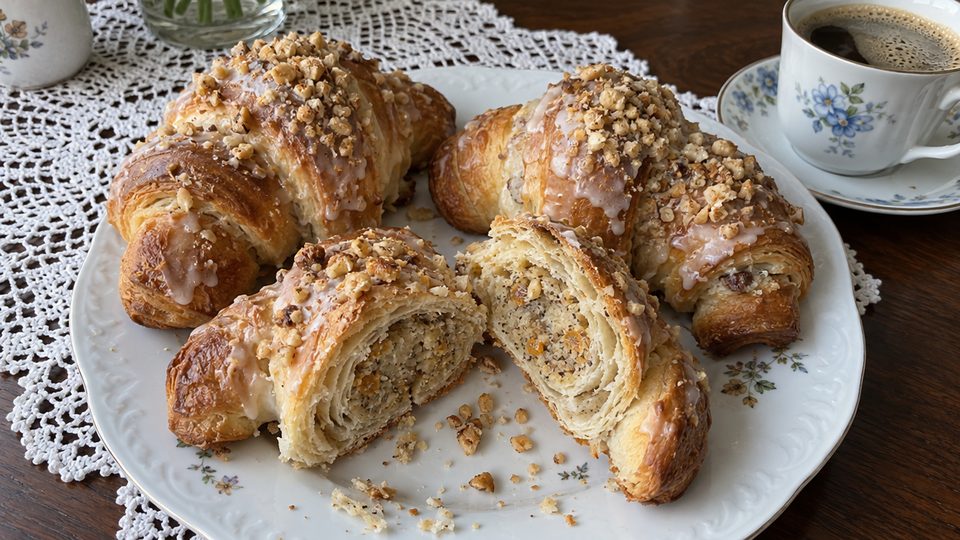
Half-puff yeast dough, rolled into a crescent shaped like a horseshoe, brushed with icing and scattered with chopped nuts. A real one weighs up to about 250 g, so one is plenty for two.
The filling
White poppy seeds mixed with nuts, raisins, candied fruit, sugar and a hint of almond. Rich, sweet and slightly marzipan-like.
The protected name
Since 2008 "rogal świętomarciński" has been protected in the EU. Only certified bakeries, mostly in and around Poznań, may sell under that name; elsewhere you'll see "rogal z białym makiem" or "rogal marciński".
11 November in Poznań
Two holidays in one
St Martin's Day falls on Polish Independence Day, a public holiday. In Poznań the day centres on Święty Marcin, the street named after the saint, with a parade led by St Martin on horseback and a street festival.
Queues at the bakeries
Poznań bakers sell around 250 tonnes of rogale on 11 November alone. Go early or order ahead from your bakery; by the afternoon the trays can be empty.
The legend
St Martin's horse lost a horseshoe; a baker made horseshoe-shaped pastries and gave them to the poor. The tradition as we know it is usually traced to a Poznań baker in 1891.
Where to try one
In Poznań
Any bakery or cukiernia with the certificate sticker in the window, around 80 of them. They're sold all year, but at their freshest around 11 November.
Croissant Museum
On the Old Market Square in Poznań (Stary Rynek 41), the Rogalowe Muzeum runs a show where you watch, and help, a rogal being made, with plenty of Poznań dialect thrown in.
Elsewhere in Poland
In November many bakeries and supermarkets across the country sell their own versions. In Kraków, look for "rogale marcińskie" in bakery windows in the days before 11 November.
FAQ
What is a St Martin's croissant?
Rogal świętomarciński is a large horseshoe-shaped pastry from Poznań, made with half-puff yeast dough and filled with white poppy seeds, nuts, raisins and candied fruit, topped with icing and nuts. It's eaten above all on 11 November, St Martin's Day.
Why do Poles eat croissants on 11 November?
11 November is St Martin's Day. According to legend, a baker made horseshoe-shaped pastries after St Martin's horse lost a shoe and gave them to the poor. In Poznań the tradition dates back to the late 19th century. The same day is Polish Independence Day.
Where can I buy a real rogal świętomarciński?
In certified bakeries, mostly in and around Poznań, which display a certificate. The name is protected in the EU since 2008, so versions sold elsewhere usually go by other names.
How big is a St Martin's croissant?
A traditional one weighs up to about 250 g, so it's easily shared between two people.
Can I get one in Kraków?
Many Kraków bakeries sell their own versions in the days around 11 November. For the certified original, you need a bakery from the Poznań region.